What Is Roof Repointing?
If you've been told your roof needs repointing, you might be wondering exactly what that means. Is it a repair? Is it part of a roof restoration? And most importantly, is it something that actually needs to be done?
At The Roof Guys Adelaide, roof repointing is one of the most common services we perform on tiled roofs throughout Adelaide. Many homeowners don't even realise their roof has a problem until they notice cracked ridge caps, loose mortar or water entering their ceiling. In reality, repointing is one of the simplest ways to extend the life of your roof and prevent far more expensive repairs down the track.
In this guide, we'll explain exactly what roof repointing is, why it's important, how it differs from rebedding, when your roof needs attention, and what you can expect from the process.
What Is Roof Repointing?
Roof repointing is the process of replacing or repairing the flexible pointing compound that secures the ridge caps and hip tiles on a tiled roof.
The ridge caps are the specially shaped tiles that run along the highest points of your roof where two roof sections meet. These caps protect the joins beneath them from wind and rain while helping hold the entire roof structure together.
Underneath these ridge caps sits a bed of mortar. On top of that mortar is a flexible pointing compound designed to seal the roof and keep the ridge caps firmly in place.
Over time, this pointing begins to deteriorate due to:
- Adelaide's hot summers
- UV exposure
- Heavy rain
- Strong winds
- Expansion and contraction caused by temperature changes
Once the pointing starts cracking or separating from the tiles, water can begin entering the roof cavity and ridge caps may loosen, creating both safety and weatherproofing issues. Repointing restores this protective layer before these problems become more serious.
Modern flexible pointing compounds are specifically designed to move with your roof as temperatures change, making them far more durable than the old cement pointing used decades ago.
Roof Repointing vs Roof Rebedding – What's The Difference?
This is one of the biggest misconceptions we hear from Adelaide homeowners.
Although the terms are often used together, they are actually two different services.
Roof Rebedding
Rebedding involves removing the old mortar underneath the ridge caps and laying brand new bedding mortar before resetting the ridge caps into position.
This is necessary when:
- Ridge caps have become loose
- Mortar has crumbled away
- Ridge caps have moved
- Sections of the roof are unstable
Roof Repointing
Repointing is the application of a new flexible pointing compound over the bedding mortar.
If the bedding underneath is still solid, only repointing may be required.
If the bedding has failed, the roof should first be rebedded before being repointed. Skipping the rebedding stage when the bedding is damaged is simply putting a new coating over an unstable foundation, which won't last. Repointing and rebedding are complementary but distinct stages of restoring ridge capping.
Why Roof Repointing Is So Important
Many homeowners assume roof repointing is only cosmetic.
It isn't.
It plays a critical role in protecting your entire home.
Prevents Water Leaks
Cracked pointing allows water to work its way underneath ridge caps.
From there, moisture can:
- Wet roof battens
- Damage insulation
- Cause ceiling stains
- Lead to mould growth
- Rot roof timbers
Repairing failed pointing early can prevent thousands of dollars in water damage.
Keeps Ridge Caps Secure
Ridge caps are constantly exposed to strong winds.
If pointing deteriorates, the ridge caps gradually become loose.
Eventually they can:
- Move during storms
- Crack
- Fall from the roof
- Create safety hazards
Proper repointing locks them securely back into place.
Extends The Life Of Your Roof
A tiled roof can last many decades when properly maintained.
Repointing is one of the simplest maintenance jobs that helps maximise its lifespan by protecting the areas most exposed to weather.
Improves Weather Resistance
Adelaide experiences everything from scorching summer heat to winter storms.
Flexible roof pointing expands and contracts with seasonal temperature changes, helping your roof remain watertight year after year. Modern flexible compounds outperform older rigid cement because they move with the roof rather than cracking under thermal expansion.
How Long Does Roof Pointing Last?
There isn't one simple answer because every roof is different.
Its lifespan depends on factors including:
- Quality of previous workmanship
- Products used
- Roof pitch
- Tree coverage
- Sun exposure
- Storm damage
- Overall roof condition
Generally speaking, professionally applied flexible pointing should last many years before requiring attention.
At The Roof Guys Adelaide, we only use premium roofing products designed for Australian conditions, ensuring our repointing work delivers long-term durability rather than short-term fixes.
Signs Your Roof Needs Repointing
Many homeowners don't inspect their roof until they notice a leak.
However, there are several warning signs that often appear long before water enters the home.
Cracked Pointing
Small hairline cracks often develop first.
Over time these cracks widen and allow moisture underneath the ridge caps.
Loose Ridge Caps
If ridge caps move when pressure is applied or appear uneven, the pointing may no longer be holding them securely.
Pieces Of Mortar In Your Gutters
Finding chunks of old pointing or mortar in your gutters is often a clear sign that your ridge capping is deteriorating.
Water Leaks During Heavy Rain
Leaks around ceiling joins or roof peaks frequently indicate failed pointing or bedding around ridge caps.
Moss Or Lichen Around Ridge Caps
Persistent moisture caused by deteriorating pointing encourages moss and lichen growth, particularly on older roofs.
Visible Gaps
Large gaps between ridge caps and roof tiles usually indicate the roof requires professional attention.
Why DIY Roof Repointing Isn't Worth The Risk
With plenty of online tutorials available, some homeowners consider attempting roof repointing themselves.
In our experience, this often ends up costing more.
Roof repointing requires:
- Safe roof access
- Correct preparation
- Professional-grade materials
- Proper weather conditions
- Experience identifying whether rebedding is also required
Applying new pointing over unstable bedding won't solve the underlying problem.
We've repaired many roofs across Adelaide where previous DIY work failed within a short period because the actual issue wasn't identified correctly.
There's also the obvious safety risk of working on a roof. Falls remain one of the leading causes of serious injuries in the construction industry, making roof work something best left to trained professionals.
What Happens During A Professional Roof Repointing Service?
At The Roof Guys Adelaide, we follow a thorough process to ensure your roof receives the right treatment—not simply the quickest one.
Step 1: Roof Inspection
Every roof is different.
We begin by carefully inspecting:
- Ridge caps
- Bedding mortar
- Existing pointing
- Roof tiles
- Flashings
- Valleys
- Overall roof condition
This allows us to determine whether simple repointing is suitable or whether sections also require rebedding or additional repairs.
The Roof Repointing Process
Once we've inspected your roof and confirmed that repointing is the right solution, we follow a proven process that delivers a long-lasting result.
Every roof is different, so we tailor our approach based on the condition of your ridge caps, bedding and roof tiles.
Step 2: Rebed Ridge Caps (If Required)
Not every roof requires rebedding.
If the bedding mortar underneath the ridge caps is still solid and securely holding the ridge caps in place, we can move straight to repointing.
However, if we find:
- Loose ridge caps
- Crumbling mortar
- Missing bedding
- Movement in the ridge line
we'll first remove the affected ridge caps, replace the bedding mortar and allow it to cure before applying the new pointing compound.
Taking this extra step ensures the ridge caps have a solid foundation and prevents future movement.
Step 3: Prepare The Roof Surface
Preparation is one of the most important parts of the job.
Before applying any new pointing, we remove loose material, dirt, moss and deteriorated pointing from around the ridge caps. This creates a clean surface that allows the new flexible pointing compound to bond properly.
Poor preparation is one of the biggest reasons repointing fails prematurely, which is why we never rush this stage.
Step 4: Apply Premium Flexible Pointing
Once the roof has been prepared, we apply a high-quality flexible pointing compound to the ridge caps.
Unlike old-style cement pointing, modern flexible compounds are designed to expand and contract as the roof naturally moves throughout the year.
This flexibility helps prevent cracking while creating a strong, weatherproof seal that protects your home from the elements.
The finished result is both durable and neat, improving the appearance of your roof while strengthening its protection.
Step 5: Final Inspection
Before we consider the job complete, we carry out a final inspection to ensure every section has been finished to our high standards.
We check:
- Ridge caps are secure
- Pointing has been applied evenly
- All repaired areas are weatherproof
- Surrounding roof tiles remain intact
- The roof is left clean and tidy
Our goal isn't simply to repair your roof—it's to leave it in better condition than when we arrived.
Why We Only Use Flexible Roof Pointing
Years ago, roofs were pointed using traditional sand and cement mortar.
While this worked for its time, cement is rigid.
As roofs heat up during Adelaide summers and cool overnight, they naturally expand and contract. Cement can't cope with this movement, which causes it to crack over time.
Modern flexible pointing products have changed the industry.
They provide:
- Greater flexibility
- Stronger adhesion
- Improved weather resistance
- Longer lifespan
- Better resistance to cracking
- A cleaner, more professional finish
At The Roof Guys Adelaide, we only use premium flexible pointing products because they consistently provide better long-term performance for our customers.
How Much Does Roof Repointing Cost?
One of the most common questions we receive is:
"How much does roof repointing cost?"
The answer depends on several factors, including:
Size Of The Roof
Larger roofs naturally require more materials and labour than smaller homes.
Condition Of Existing Pointing
If only small sections need attention, repairs may be relatively straightforward.
If the majority of the ridge capping has deteriorated, more extensive repointing may be required.
Whether Rebedding Is Needed
If ridge caps are loose or the bedding mortar has failed, rebedding will need to be completed before repointing can begin.
Roof Accessibility
Steep roofs, multi-storey homes and difficult access can increase the time required to complete the work safely.
Overall Roof Condition
Sometimes a roof inspection uncovers additional issues such as broken tiles, flashing problems or leaks that should be repaired at the same time.
Rather than providing one-size-fits-all pricing, we prefer to inspect your roof and provide an honest, detailed quote based on exactly what your roof needs—nothing more and nothing less.
Does Roof Repointing Add Value?
While repointing isn't usually something buyers notice straight away, they certainly notice the problems it prevents.
Well-maintained roofs help:
- Improve street appeal
- Reduce the likelihood of leaks
- Increase buyer confidence
- Prevent visible deterioration
- Demonstrate ongoing maintenance
If you're planning to sell your home, repairing damaged ridge capping before listing can present your property in a much better light and eliminate issues that may arise during building inspections.
How Roof Repointing Fits Into A Roof Restoration
Many people think roof repointing and roof restoration are the same service.
They're not.
Roof repointing is often one part of a complete roof restoration.
A full tiled roof restoration may include:
- Roof inspection
- Pressure cleaning
- Tile replacement
- Roof repairs
- Rebedding ridge caps
- Repointing
- Sealing
- Roof painting
Not every roof requires all of these services.
For example, if your roof coating is still in excellent condition but the ridge cap pointing has deteriorated, repointing alone may be all that's needed.
At The Roof Guys Adelaide, we never recommend unnecessary work. Our focus is on providing the right solution based on the condition of your roof.
Why Adelaide Roofs Often Need Repointing
Adelaide's climate can be tough on tiled roofs.
Over the years, roofs are exposed to:
- Long periods of intense UV exposure
- High summer temperatures
- Heavy winter rain
- Strong winds
- Seasonal expansion and contraction
These conditions gradually wear down roof pointing, particularly on older homes where the original materials may have reached the end of their lifespan.
Many Adelaide suburbs also have mature trees that contribute to moss, lichen and debris build-up, trapping moisture around ridge caps and accelerating deterioration if the roof isn't maintained.
Regular roof inspections allow these issues to be identified early before they develop into leaks or structural problems.
Why Homeowners Choose The Roof Guys Adelaide
Roof repointing isn't simply about applying new mortar.
It's about understanding how the entire roof system works together.
At The Roof Guys Adelaide, we take the time to properly assess every roof before recommending any work. If your roof only needs repointing, that's exactly what we'll recommend. If roof rebedding or additional repairs are required, we'll explain why and show you what we've found.
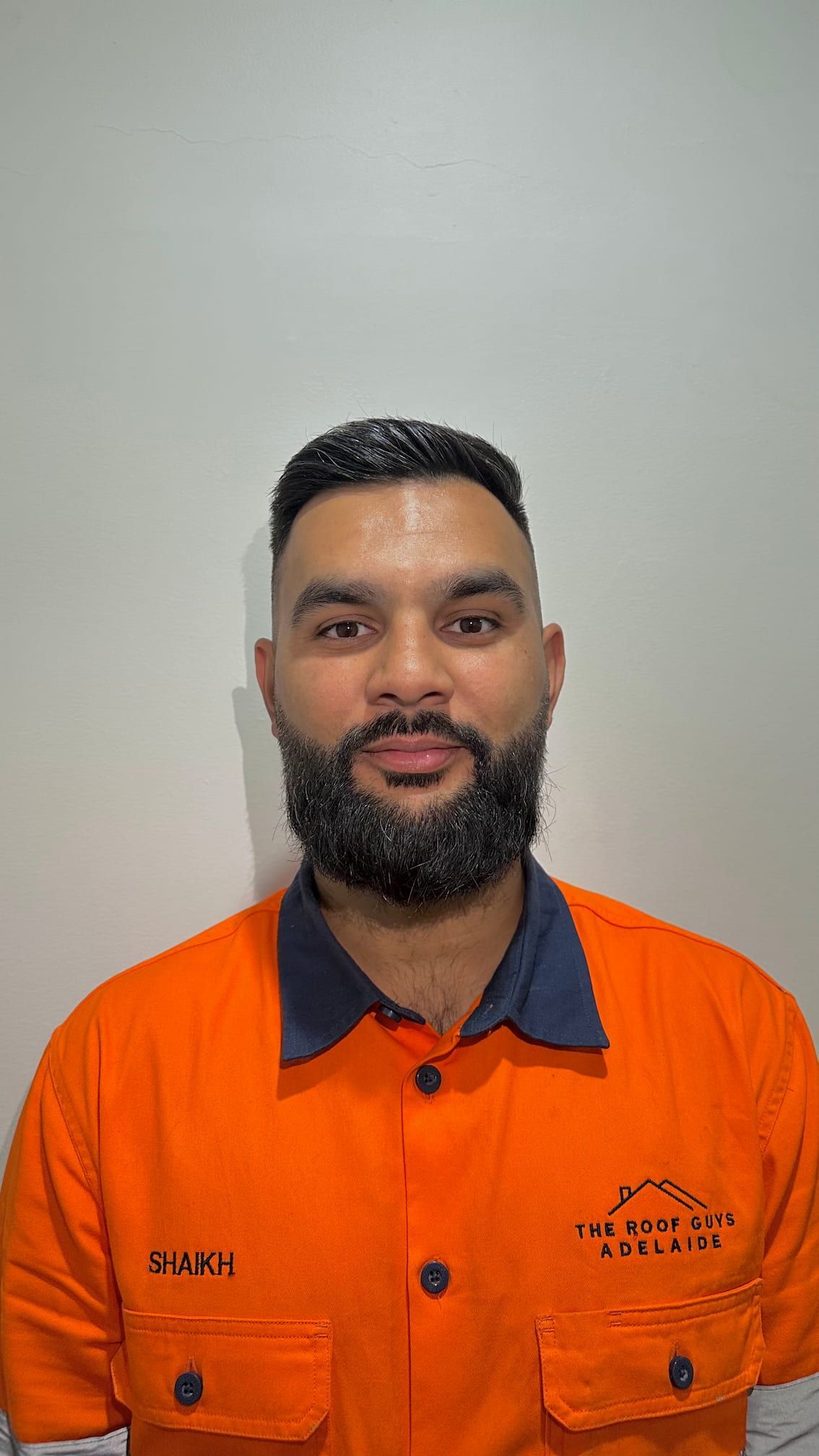
Written by Shaik
Shaikh has been in the Adelaide roofing industry for over eight years and holds a degree in Construction Management. He is the founder of The Roof Guys Adelaide, specialising in high-quality roof restorations and repairs.