How To Clean A Colorbond Roof
The best starting point for cleaning a Colorbond roof is fresh water, followed by a mild solution of pure soap or non-abrasive dishwashing detergent if dirt remains. Gentle cleaning with a soft nylon brush, sponge or cloth helps protect the finish, and any detergent should be rinsed away thoroughly.
However, cleaning a roof involves more than choosing a detergent. Access, roof condition, drainage and the type of staining all affect the safest approach. A dirty roof may need a straightforward clean, while peeling paint, corrosion or persistent discolouration require a closer inspection.
At The Roof Guys Adelaide, we provide roof cleaning, repairs and restoration services for Adelaide homes. Our advice is to assess the surface before deciding how to clean it. The aim is to remove contamination while preserving the roof’s existing protective finish.
This guide explains how to clean a Colorbond roof, what to avoid and when professional help makes sense.
Does A Colorbond Roof Need Cleaning?
Colorbond roofing is designed to require relatively little maintenance. On exposed roof areas, natural rainfall helps wash away ordinary dirt. That means every Colorbond roof does not automatically need a full professional wash each year.
Sheltered areas are different. Surfaces beneath eaves and other locations that do not receive regular rain washing can accumulate deposits. These unwashed areas need periodic cleaning, with additional attention in coastal or heavily polluted environments.
A roof may also need attention when leaves collect around penetrations, birds leave concentrated droppings or organic growth develops in shaded sections.
The practical approach is to inspect its condition and clean where needed. If the surface looks faded rather than dirty, washing may improve its appearance without restoring the original colour.
What Builds Up On Adelaide Metal Roofs?
The location of your home influences what collects on its roof.
A property near trees may accumulate leaves, twigs and bird droppings. Shaded sections can remain damp longer, creating conditions where organic growth may develop. Homes near busy roads or industrial areas may experience airborne deposits.
Coastal properties around suburbs such as Brighton, Glenelg and Semaphore also need attention to sheltered areas where salt deposits can accumulate.
Different marks need different responses. Before cleaning, establish whether you are dealing with loose dirt, organic growth, rust staining or deterioration of the coating.
| Roof Issue | Recommended Starting Point |
|---|---|
| Loose dust and ordinary dirt | Fresh water, followed by gentle washing if needed |
| Stubborn general grime | Mild detergent and a soft cleaning tool |
| Leaves and twigs | Careful removal without scratching the finish |
| Bird droppings | Gentle cleaning without abrasive scraping |
| Fungal growth | A treatment assessed for compatibility with the roof finish |
| Rust-coloured marks | Inspection to identify the source |
| Peeling paint or persistent fading | Assessment for coating deterioration or restoration |
Rust and failing coatings should not be treated as stubborn dirt that simply needs more scrubbing.
Can You Clean A Colorbond Roof Yourself?
Some accessible maintenance can be managed from ground level. Roof access is a different matter.
Wet metal roofing is slippery, and cleaning introduces water, hoses and equipment into an already hazardous work area. Roof pitch, height, fragile components and nearby electrical services can increase the risk.
Avoid climbing onto the roof simply to try a cleaning product. A household ladder and suitable shoes do not provide a complete system for safe roof work.
For elevated, steep or difficult-to-access roofs, use an appropriately equipped professional. This also gives you an opportunity to have the sheets, fixings and flashings assessed before cleaning starts.
The steps below explain the cleaning process. They should be carried out only where safe access and appropriate controls are in place.
How To Clean A Colorbond Roof: Step By Step
1. Inspect The Roof Before Washing
Start by checking the roof’s material, finish and condition.
An original factory-coated Colorbond surface may need a different approach from a roof that has been repainted. On a repainted roof, the maintenance requirements of the applied coating also matter.
Look for peeling areas, corrosion, damaged sheets, deteriorated screw washers and defects around flashings. Existing leaks should be assessed before water is deliberately introduced during cleaning.
At The Roof Guys Adelaide, we recommend dealing with roof defects rather than expecting a wash to solve them. Cleaning can improve appearance, but it cannot repair damaged roofing.
2. Plan Drainage And Protect The Property
Before washing, establish where the runoff will go.
Move or protect outdoor furniture and keep people and pets clear of the work area. Consider nearby plants, painted surfaces and equipment that could be affected by cleaning products.
If the roof supplies a rainwater tank, arrange to divert cleaning runoff before work begins. Reconnection should happen only after adequate rinsing and in accordance with the cleaning product and rainwater-system guidance.
Solar panels, skylights and electrical equipment also need consideration. Do not assume a roof-cleaning method is suitable for every component mounted on the roof.
3. Remove Loose Debris
Leaves, twigs and accumulated debris should be removed carefully before washing.
Avoid dragging sharp material across the coating or using metal tools to scrape the surface. Loose debris should be collected rather than pushed into gutters and downpipes.
Pay attention to areas around valleys, roof penetrations and gutter outlets. Clearing these locations helps prevent the cleaning process from moving an existing blockage further into the drainage system.
4. Start With Fresh Water
For ordinary contamination, begin with fresh water rather than a strong chemical treatment.
A gentle rinse may remove loose dirt without requiring detergent. Water should follow the roof’s drainage direction rather than being forced beneath sheet overlaps, flashings or penetrations.
This stage also helps establish which marks are removable dirt and which need further assessment.
5. Use Mild Detergent Where Required
Where water alone is insufficient, gentle washing with a mild soap or non-abrasive detergent solution may be appropriate.
Use a soft cleaning tool and light pressure. Avoid repeated hard rubbing on one patch, which can alter the appearance of the finish. Work in manageable sections so cleaning solution does not dry onto the roof.
For persistent marks, obtain advice before changing chemicals or increasing the intensity of cleaning. If ordinary soap or detergent does not remove the material, the next step is to identify the stain and confirm a suitable treatment.
6. Rinse And Check The Result
Rinse cleaning products away thoroughly with fresh water.
Once the roof has dried, review the result. Remaining discolouration may indicate fading, surface deterioration or another issue rather than incomplete cleaning.
Check that debris has been collected and that gutters and outlets remain clear. If defects become visible during the wash, arrange an assessment before considering painting or further treatment.
Can You Pressure Wash A Colorbond Roof?
Do not assume a pressure washer is the best tool for routine Colorbond maintenance.
An aggressive jet can damage an existing finish or force water into vulnerable roof details. The risk depends on the equipment, nozzle, distance, spray direction and condition of the roof.
There is also a distinction between maintaining an intact factory finish and preparing a deteriorated roof for repainting. Restoration preparation may involve methods selected for the existing coating and the new system being applied.
Ask a contractor how their proposed method suits your roof. A pressure setting used for concrete paving should not automatically be transferred to coated metal roofing.
Is Softwashing Safe For Colorbond?
“Softwashing” describes a low-pressure cleaning approach, but the term alone does not establish whether a treatment is suitable.
The chemical, concentration, contact time and rinsing procedure all matter. A low-pressure application can still damage a finish if the treatment is incompatible.
Fungal growth may require a specific treatment, but excessive chemical concentration or prolonged contact can harm the roof’s protective finish. Treatment runoff must also be kept out of rainwater tanks.
For this reason, avoid applying a general-purpose roof treatment without confirming its suitability for the particular surface.
What Should You Avoid When Cleaning Colorbond?
Abrasive tools and solvent cleaners are unsuitable for routine cleaning of Colorbond finishes. Steel wool, harsh scouring pads and products such as paint thinners or kerosene can damage or mark the surface.
Other mistakes include:
- Increasing pressure when a stain does not move.
- Letting cleaning products dry on the surface.
- Washing debris into downpipes.
- Treating rust as ordinary grime.
- Using the same method on factory-coated and repainted roofs.
- Ignoring existing leaks or damaged fixings.
A stubborn mark is a reason to reassess the problem, rather than keep escalating the cleaning method.
How Often Should You Clean A Colorbond Roof?
There is no universal schedule for washing an entire Colorbond roof.
Exposed surfaces may receive sufficient natural rain washing, while sheltered areas require more regular maintenance. A useful maintenance guide is to wash unwashed areas at least every six months, or every three months in locations with significant marine salt, dust or industrial deposits. These intervals apply to sheltered surfaces rather than an automatic whole-roof cleaning schedule.
Base additional cleaning on the roof’s condition, surrounding trees and local exposure.
Gutters need separate attention. A roof that appears clean from the street can still have accumulated debris affecting drainage.
Will Cleaning Make An Old Roof Look New?
Cleaning can make a noticeable difference when dirt and organic growth are the main problems.
It will not reverse faded colour, replace a deteriorated coating or repair corrosion. If the roof remains patchy after cleaning, it may need repairs or an assessment for repainting.
The Roof Guys Adelaide provides metal roof restoration services that can include cleaning, rust treatment, minor repairs, replacement fixings and suitable protective coatings. The appropriate scope depends on the roof’s condition.
Professional Colorbond Roof Cleaning In Adelaide
The right cleaning method starts with understanding the roof.
If your Colorbond roof has heavy build-up, difficult access or signs of deterioration, contact The Roof Guys Adelaide for a free inspection and quote. We can assess whether roof cleaning is sufficient or whether roof repairs and restoration should form part of the work.
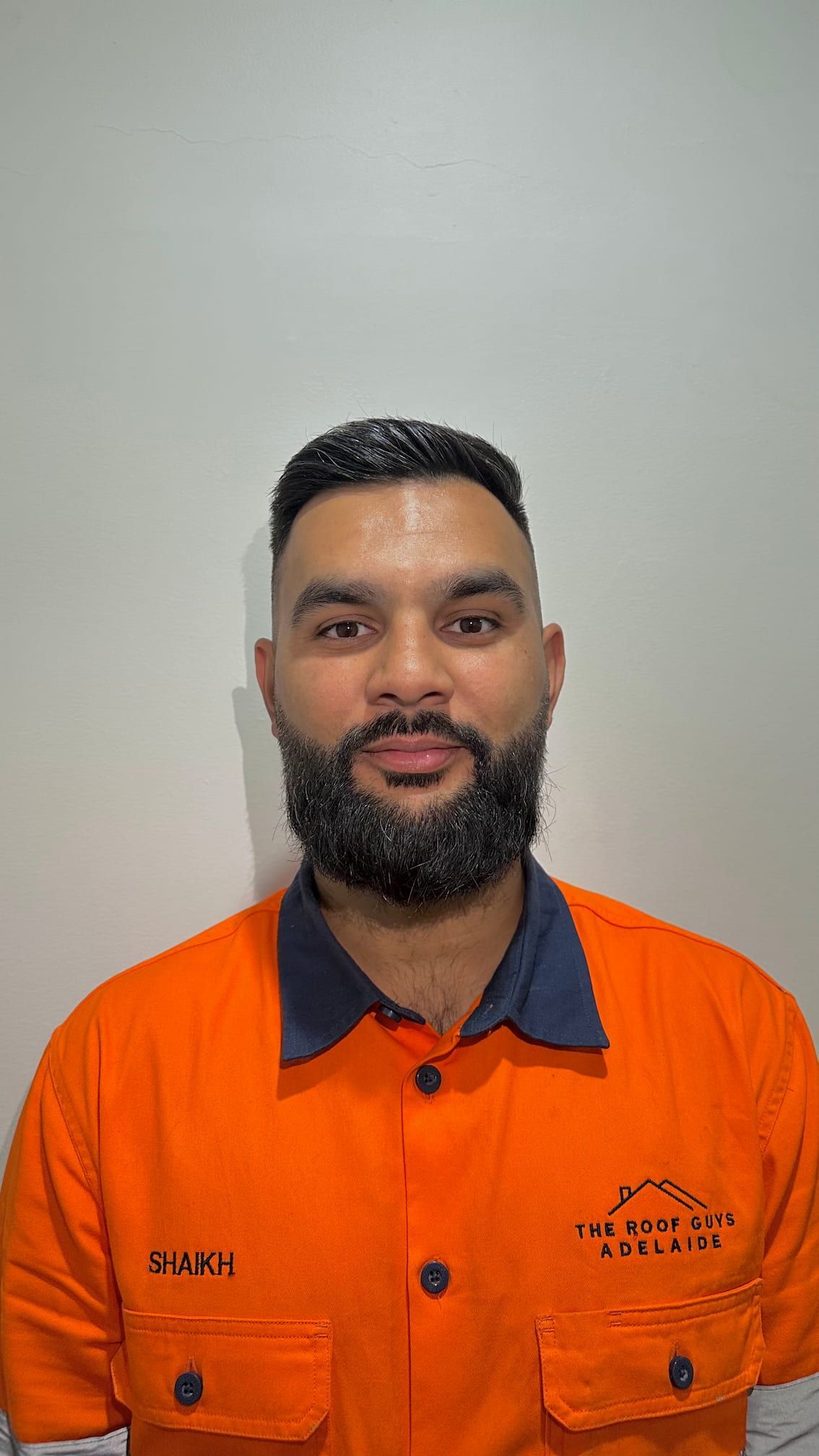
Written by Shaik
Shaikh has been in the Adelaide roofing industry for over eight years and holds a degree in Construction Management. He is the founder of The Roof Guys Adelaide, specialising in high-quality roof restorations and repairs.